

Warehouse racking
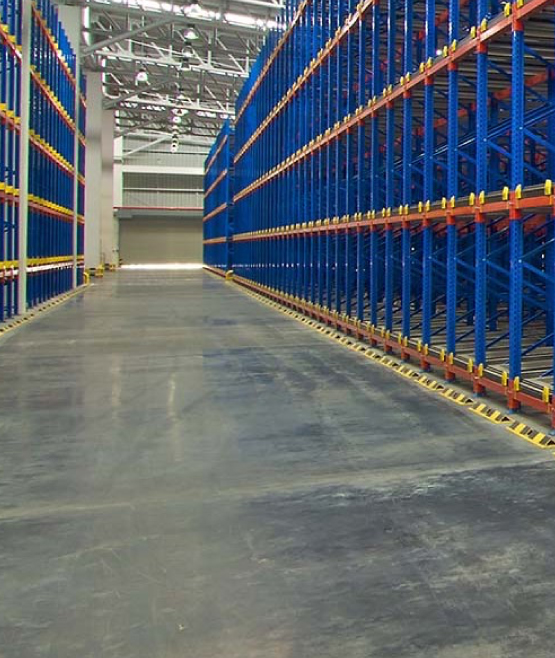
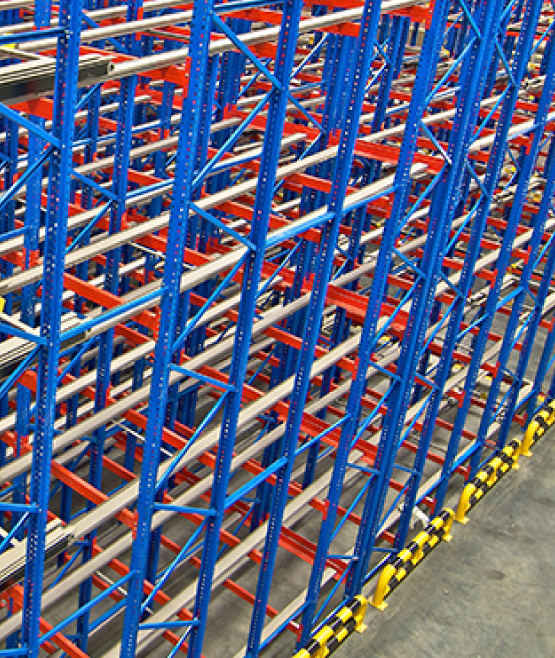
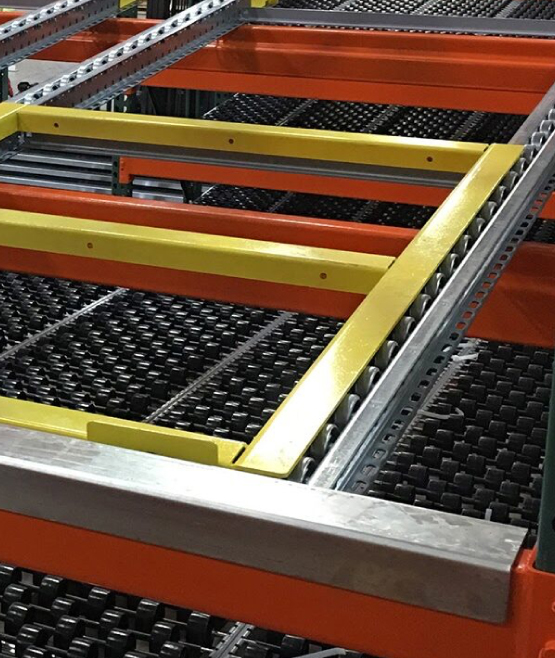
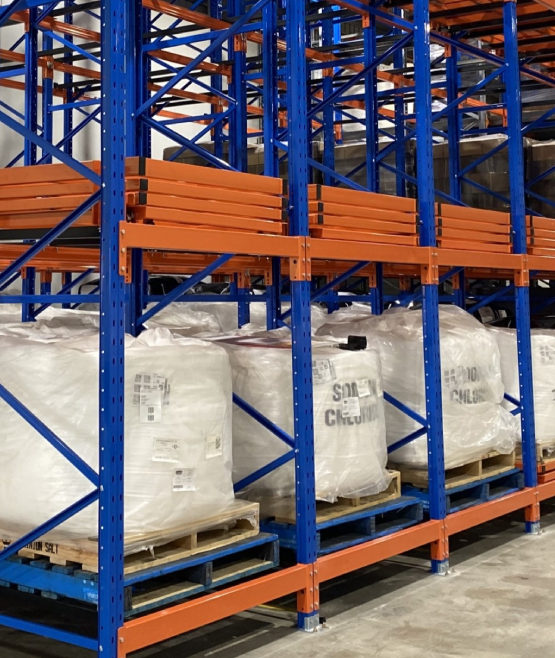
Push-Back Pallet Racking System
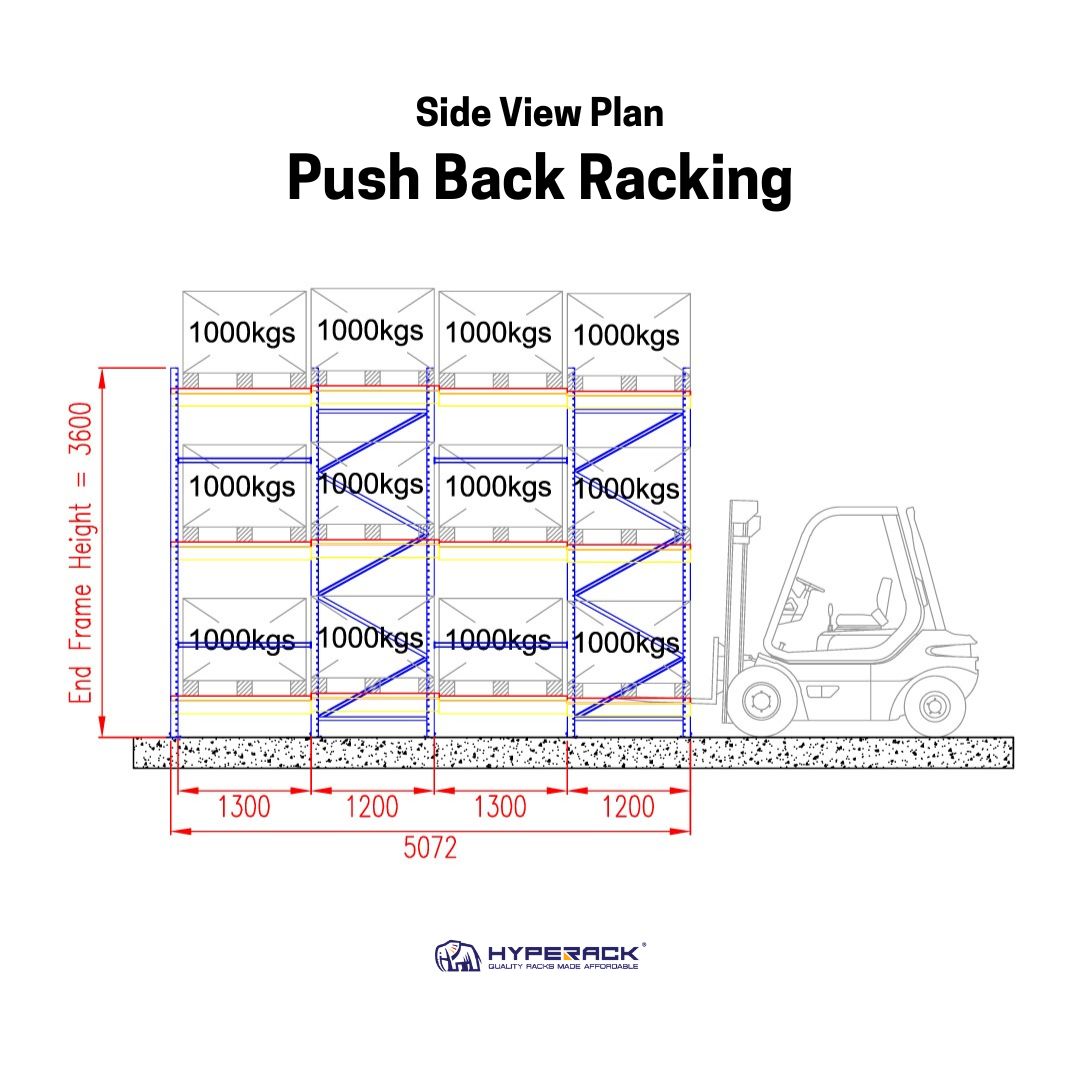
Push Back Pallet Racking systems are designed to optimize warehouse storage and enhance efficiency. In these systems, pallets are loaded from the front, which pushes the pallets behind them back by one position. When it’s time to unload, the front pallet is removed, and the rear pallets automatically advance to the front picking position. This dynamic ensures a smooth flow of goods and reduces handling time.
Push Back Pallet Racking is famous for its high-density storage capability. Unlike traditional racking systems, which require separate aisles for access, Push Back Pallet Racking consolidates storage into compact lanes. This space-saving approach allows for multiple pallets to be stored in a single lane, significantly maximizing warehouse capacity.
Moreover, Push Back Pallet Racking is ideal for handling various types of products, especially those that are stored in bulk. The system supports first-in, last-out (FILO) inventory management, which is beneficial for products with longer shelf life or those that do not require frequent rotation.
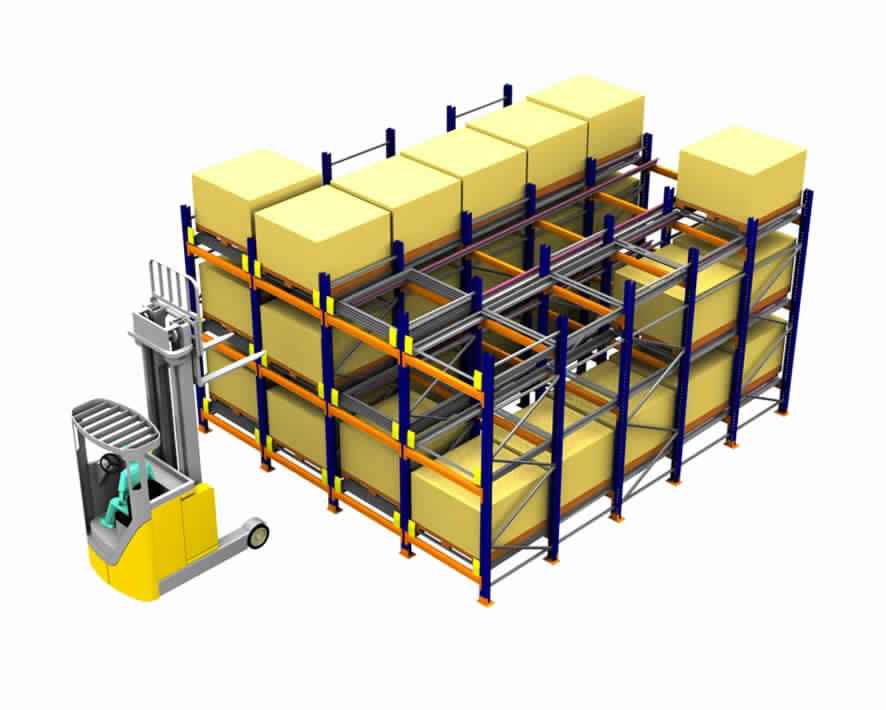
Ideal for
- Used for bulk storage / cold store
- Different size or types of palletize stocks
- Limited Stock Rotation
- Limited chambers and a single access aisle
Advantages
- High Density Storage- maximizing cubic space – Not Aisles
- Quick easy access to different size of pallet types
- Pallet automatically presented at the rack pick face
- Reduces truck travel distances, and cuts cycle times
5 Easy Steps
1. Enquiry
Your journey begins with a simple enquiry. Once we receive your request, our team will review the details and match you with the right expert. We’ll then arrange a quick call or email to learn more about your goals and expectations.
2. Free Consultation
After your initial consultation, we’ll arrange a site visit to assess your space and needs in detail. You’ll meet your dedicated project manager, who will guide the process from start to finish—ensuring everything runs smoothly and efficiently.
3. 3D CAD Design
After the site survey, your project manager will recommend layout options tailored to your space and needs. We’ll then create accurate 3D CAD designs to help you visualise exactly how your facility will look once complete.
4. Instant Quote
You’ll receive a free, personalised quote with a full breakdown of the recommended equipment. We offer high-quality products at competitive prices, with reliable delivery times to keep your project on schedule.
5. Installation
We’ll agree on an installation schedule that suits your operations. Our accredited team will complete the setup, conduct a final inspection with you, and provide follow-up support, including annual safety checks.
Ready to make a change?
We are here to help you choose the best racking for your business. Schedule a call with our representative today.

FAQ
What types of warehouses benefit most from Push Back Racking Systems?
Push Back Racking Systems are most effective in warehouses with medium to high-density storage requirements where space optimization is critical. These systems excel in industries that store bulk products, such as food, beverage, chemicals, and pharmaceuticals, where inventory turns are moderate but space efficiency is a priority. The system’s ability to maximize vertical space while maintaining high throughput makes it ideal for facilities with limited floor area.
How does Push Back Racking compare to Pallet Flow Racking?
Push Back Racking operates using a gravity-fed mechanism, where pallets are loaded from the front and pushed back into the racking lanes. It follows the Last-In, First-Out (LIFO) inventory method, making it suitable for products with longer shelf lives or those not requiring frequent rotation.
In contrast, Pallet Flow Racking employs gravity rollers and a sloped system to push pallets forward, ensuring the First-In, First-Out (FIFO) inventory method, ideal for perishable goods or products requiring strict date tracking. Push Back systems offer higher density storage by reducing the need for aisles, while Pallet Flow systems provide faster access for time-sensitive products.
Can Push Back Racking handle mixed SKUs within the same lane?
While traditional Push Back Racking systems are optimized for single-SKU lanes to ensure smooth and predictable pallet flow, advanced configurations can support mixed SKUs within the same lane. This requires more precise control mechanisms, such as adjustable rollers or dedicated stops, to prevent pallets from becoming misaligned. This approach allows for more flexible storage while maintaining efficient space utilization, though it may reduce the overall system’s efficiency compared to single-SKU lanes.
What safety features should be considered for Push Back Racking Systems?
Technically, Push Back Racking systems incorporate several safety features to minimize risk:
- Automatic pallet stop systems to prevent pallets from overhanging or falling during loading/unloading.
- Brake mechanisms within the rails or carts to control the speed at which pallets move, preventing excessive momentum that could cause accidents.
- Rack impact protection using heavy-duty bumpers or reinforced posts to protect the racking structure from forklift damage.
Regular safety audits are essential, ensuring proper alignment and load distribution within each lane.
What maintenance is required for Push Back Racking Systems?
Maintenance for Push Back Racking involves periodic inspection of the following:
- Carts and rollers: Regular checks for wear or damage to ensure smooth pallet movement. Clogged or damaged rollers can cause jams or slowdowns, leading to operational inefficiencies.
- Inclined rails: Ensure that the rails are free from debris and properly lubricated to maintain smooth operation.
- Structural integrity: The racking framework should be checked for structural weaknesses, particularly in high-stress areas like the load-bearing supports.
- Pallet adjustments: Check that pallet sizes match the racking configuration. Mismatched pallets can cause alignment issues and reduce overall system efficiency.
Scheduled maintenance and cleaning of these components help extend the system’s lifespan and improve operational efficiency.
How much does Push Back Racking cost?
The cost of Push Back Racking depends on several factors, including the size of the system, the number of levels and lanes, weight capacity, and any additional customizations. On average, Push Back Racking systems can cost start from RM400 per pallet position in Malaysia. Installation, material quality, and specific requirements (e.g., for cold storage) may further impact the price.
What is the specification of Push Back Racking?
Push Back Racking systems typically have the following specifications:
- Material:
High-strength steel for durability and load support. - Configuration:
Can accommodate pallet depths of 2 to 6 deep per lane. - Weight capacity:
Each pallet level can support 500kg to 2,000kg, depending on the design. - Rails:
Inclined rails and carts enable the pallets to roll smoothly in and out. - Design flexibility:
Can be customized for warehouse height and width requirements.
Do Push Back Racking Systems require special forklifts?
No, Push Back Racking Systems do not require special forklifts. Standard forklifts, including counterbalance and reach trucks, are compatible. Operators can easily load and retrieve pallets without modifying existing equipment.
How deep can Push Back Racking Systems be configured?
Push Back Racking Systems can be configured to store pallets from 2 to 6 deep per lane, depending on the design and operational needs. This depth provides flexibility for maximizing storage density while ensuring efficient inventory management. Larger depths may require considerations for pallet stability and load weight.
Can Push Back Racking Systems be used in cold storage or freezer environments?
Yes, Push Back Racking Systems are ideal for use in cold storage and freezer environments. They are made from materials and finishes, such as galvanized or powder-coated steel, that can withstand low temperatures and resist corrosion. This makes them suitable for storing perishable goods efficiently in temperature-controlled warehouses.