
Warehouse racking
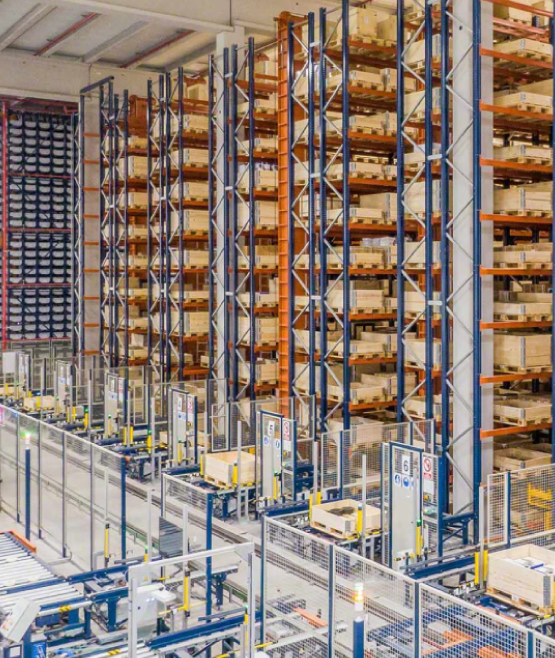
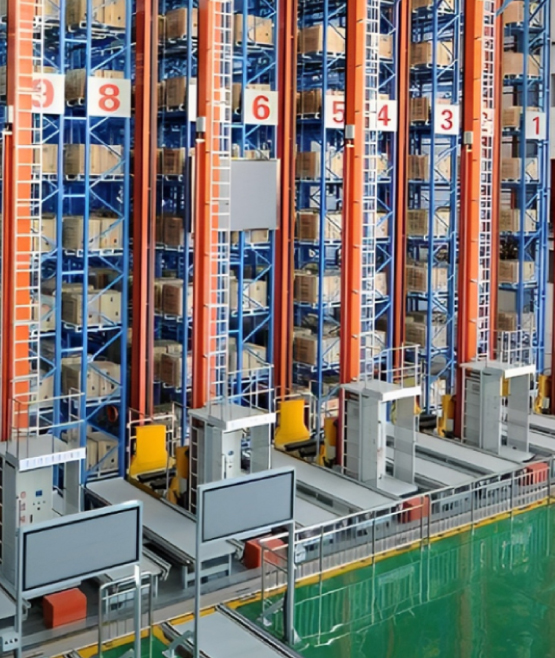
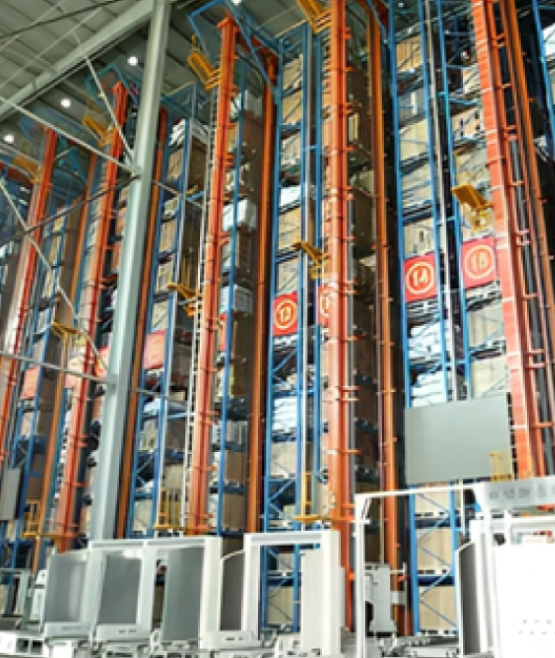
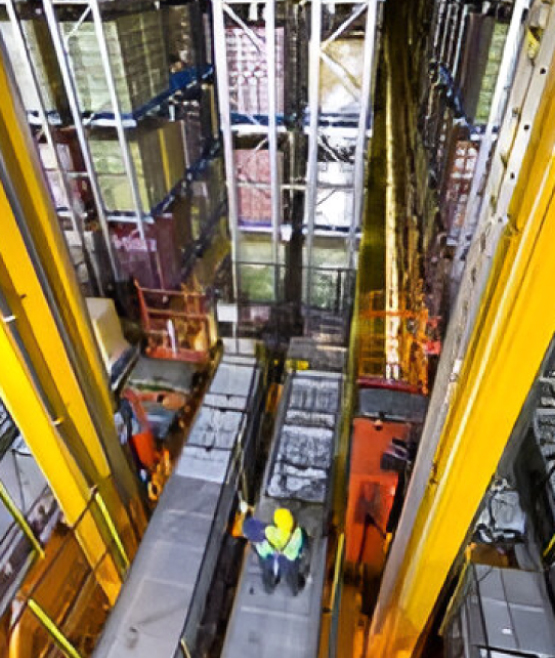
ASRS – Automated Storage and Retrieval System
ASRS racking system, or Automated Storage and Retrieval System, is revolutionizing the way warehouses operate. An ASRS warehouse racking system utilizes cutting-edge technology to enhance storage and retrieval processes. This system relies on computer-controlled machinery to efficiently manage inventory, dramatically improving operational efficiency and reducing human error.
In an ASRS warehouse racking system, items are stored in automated racks and retrieved by advanced robotic systems, which function as highly skilled warehouse workers. The result? Streamlined operations and a significant boost in productivity.
At Hyperack, we specialize in providing and installing the essential racking components for the ASRS warehouse racking system. Our expertise ensures that your warehouse is equipped with the right racking system to support seamless integration with your automated storage and retrieval solutions.
Hyperack’s commitment to excellence in racking solutions makes us the ideal partner for implementing ASRS warehouse racking systems. Our high-quality racking systems are designed to seamlessly integrate with automated technologies, enhancing the performance and efficiency of your warehouse.
Ideal for
- Businesses that handle large quantities of items
- Industries with intricate supply chain
- Warehouses that need to process orders quickly and efficiently to meet demand
- Sectors that require high levels of inventory accuracy
Advantages
- Rapidly process high volumes of inventory, reducing time and increasing throughput
- Automation minimizes the need for manual labor, lowering operational costs and reducing human error
- By reducing the need for manual handling, automated systems lower the risk of workplace injuries
5 Easy Steps
1. Enquiry
Your journey begins with a simple enquiry. Once we receive your request, our team will review the details and match you with the right expert. We’ll then arrange a quick call or email to learn more about your goals and expectations.
2. Free Consultation
After your initial consultation, we’ll arrange a site visit to assess your space and needs in detail. You’ll meet your dedicated project manager, who will guide the process from start to finish—ensuring everything runs smoothly and efficiently.
3. 3D CAD Design
After the site survey, your project manager will recommend layout options tailored to your space and needs. We’ll then create accurate 3D CAD designs to help you visualise exactly how your facility will look once complete.
4. Instant Quote
You’ll receive a free, personalised quote with a full breakdown of the recommended equipment. We offer high-quality products at competitive prices, with reliable delivery times to keep your project on schedule.
5. Installation
We’ll agree on an installation schedule that suits your operations. Our accredited team will complete the setup, conduct a final inspection with you, and provide follow-up support, including annual safety checks.
Ready to make a change?
We are here to help you choose the best racking for your business. Schedule a call with our representative today.

FAQ
How does an ASRS System differ from traditional manual storage and retrieval methods in terms of technology?
An ASRS System uses advanced robotics, conveyor systems, and automated guided vehicles (AGVs) to perform tasks traditionally done by human workers. Unlike manual methods where workers rely on forklifts or pallet jacks, ASRS automates both the storage and retrieval of goods using high-speed cranes, shuttles, or robotic arms. This technology integrates with warehouse management software (WMS) and enterprise resource planning (ERP) systems for real-time inventory tracking and optimized routing.
What types of products or goods are most compatible with ASRS in terms of storage requirements?
ASRS Systems are best suited for homogeneous, high-turnover goods that require efficient picking and precise location tracking. They excel in environments with products such as pallets, totes, cartons, and even smaller parts that can be stored in trays or bins. The systems are particularly effective in environments that require real-time inventory management and high-density storage, like cold storage facilities, pharmaceuticals, or automotive parts warehouses, where precise temperature control and order accuracy are critical.
How does ASRS optimize space utilization and improve storage density in a warehouse?
ASRS Systems maximize storage density by utilizing vertical storage space, allowing goods to be stored in compact configurations. These systems use automated cranes, shuttles, or vertical lift modules (VLMs) to move inventory within narrow aisles, which traditional racking systems cannot efficiently access. This results in a higher number of storage locations in the same footprint, often increasing space utilization by up to 60-80%. Additionally, ASRS systems can be integrated with multi-tiered racking systems to further increase vertical storage potential.
What is the total cost of ownership (TCO) of an ASRS System, and how does it compare to traditional racking systems in terms of ROI?
The total cost of ownership (TCO) of an ASRS System includes the initial capital investment for machinery, integration with WMS, maintenance costs, and operational energy consumption. While the upfront cost of an ASRS System can be substantial, the ROI is realized through the automation of material handling processes, which reduces labor costs, minimizes errors, and accelerates throughput. Over time, businesses typically experience a 20-40% reduction in operational costs and achieve break-even within 2-5 years due to faster processing, fewer inventory errors, and optimized space utilization.
Does ASRS racking system utilize robots 100%?
Yes, modern ASRS systems typically operate with robotic automation for storage and retrieval tasks. However, human intervention may still be required for certain processes such as system maintenance, loading/unloading entry points, or addressing exceptions like damaged goods. While robots handle most of the operations, the system is designed to work alongside human operators when needed.
What is unit weight per load ASRS racking system robot hold?
The unit weight capacity of ASRS robots depends on the type of system:
- Mini-Load ASRS:
Typically handles loads between 30 kg to 500 kg per unit. - Unit-Load ASRS:
Designed for heavier items, with capacities ranging from 500 kg to 2,000 kg per load. - Custom Systems:
Some systems can be designed to handle even heavier loads, depending on the application and equipment specifications.
The exact capacity is determined by the manufacturer’s design and the specific needs of the operation.
How accurate is ASRS racking system load in and out?
ASRS systems are highly accurate, with most achieving a retrieval and placement accuracy of ±1 to 2 millimeters. This precision is ensured through advanced sensors, automated control systems, and software integration, minimizing human error and reducing the risk of misplaced or damaged items.
What is ASRS racking system requirement?
The requirements for implementing an ASRS racking system include:
- Space and Layout:
Adequate ceiling height and floor space to accommodate the racking system and automation equipment. - Power Supply:
A reliable power source for operating robots, conveyors, and other equipment. - Weight Capacity:
The racks must support the maximum unit load weight per location. - WMS Integration:
Integration with a Warehouse Management System (WMS) for inventory tracking and control. - Environmental Conditions:
Consideration of temperature and humidity levels, especially for specialized storage needs like cold storage.
What safety considerations are associated with ASRS implementation?
Safety measures include:
- Emergency Stops:
Easily accessible emergency stop buttons to immediately halt operations in case of malfunction. - Barriers and Fencing:
Physical barriers to prevent unauthorized personnel from entering active zones. - Load Sensors:
Sensors to detect weight imbalances and prevent overloading. - Safety Training:
Proper training for employees on interacting with the system safely. - Compliance Standards:
Adherence to local safety regulations and standards for automated systems.
What is the typical implementation timeline for an ASRS System, including integration with existing warehouse management systems (WMS)?
The implementation timeline for an ASRS System can range from 3 to 12 months, depending on the scale of the installation and the complexity of integration with existing warehouse management systems (WMS) and enterprise resource planning (ERP) software. Key stages of implementation include site preparation, hardware installation (e.g., robotic arms, conveyors, and shuttles), software integration for inventory management, and testing of automated processes. During this time, there may also be a need for employee training to operate and maintain the automated systems effectively.