

Warehouse racking
Drive-In Pallet Racking System
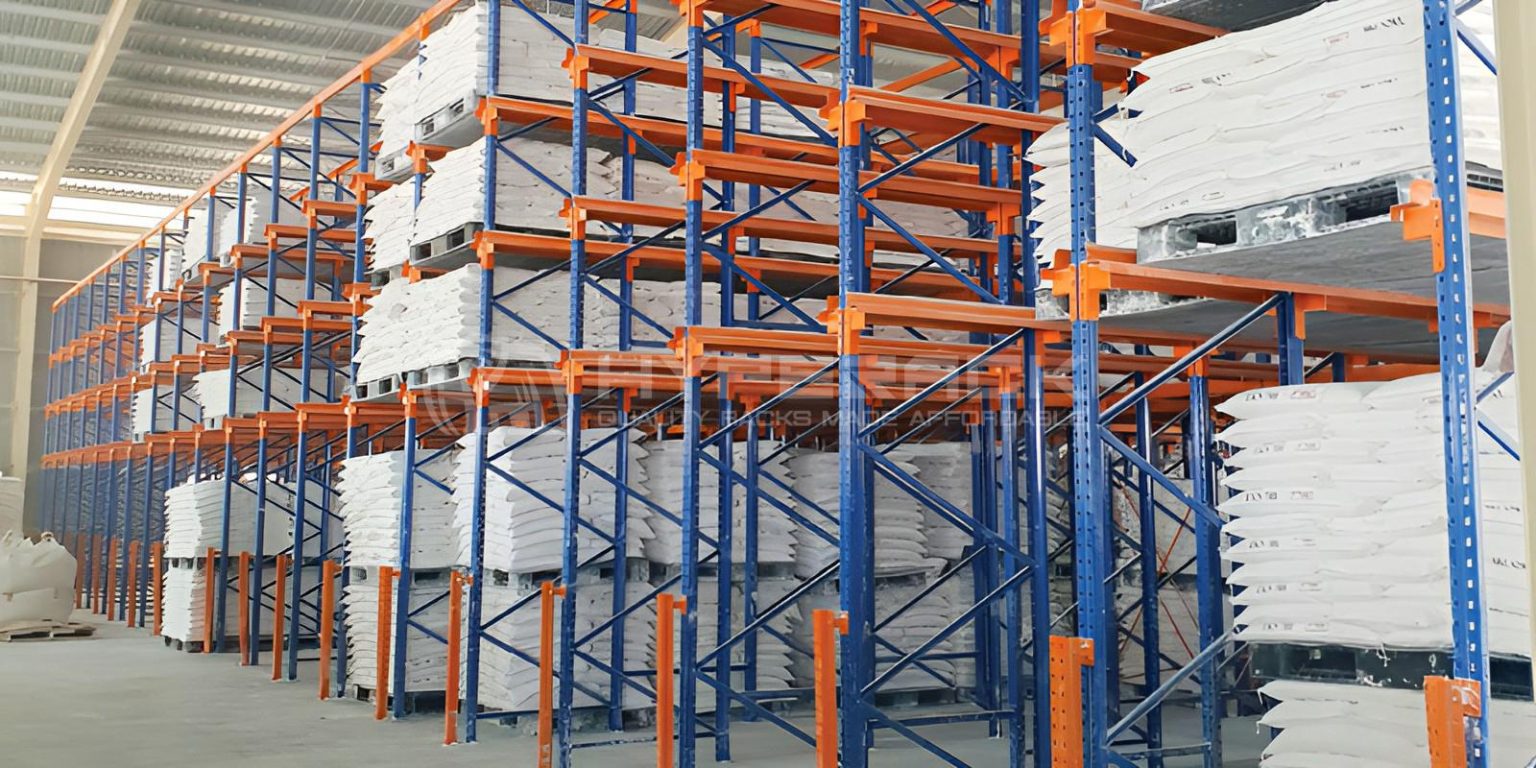
If you’re seeking an efficient way to enhance your warehouse storage capacity, consider Drive-In Pallet Racking. This high-density storage solution is specifically designed to optimize space by allowing you to store more pallets in less floor area. With Drive-In Pallet Racking, multiple tall racks are set up with parallel lanes, enabling forklifts to load and unload pallets directly from these lanes.
Drive-In Pallet Racking is ideal for warehouses that handle large quantities of similar bulk items. By utilizing the vertical space, this system allows you to increase your storage density significantly. Unlike traditional shelving, which can waste valuable space, Drive-In Pallet Racking maximizes every inch of your warehouse floor.
However, it’s crucial to weigh the advantages against potential drawbacks. While Drive-In Pallet Racking can greatly enhance storage efficiency, it may affect access to individual pallets. This system works best for items that are stored in bulk and are not needed for frequent retrieval. Proper planning and consideration of your warehouse’s operational needs will ensure that Drive-In Pallet Racking serves your business effectively.
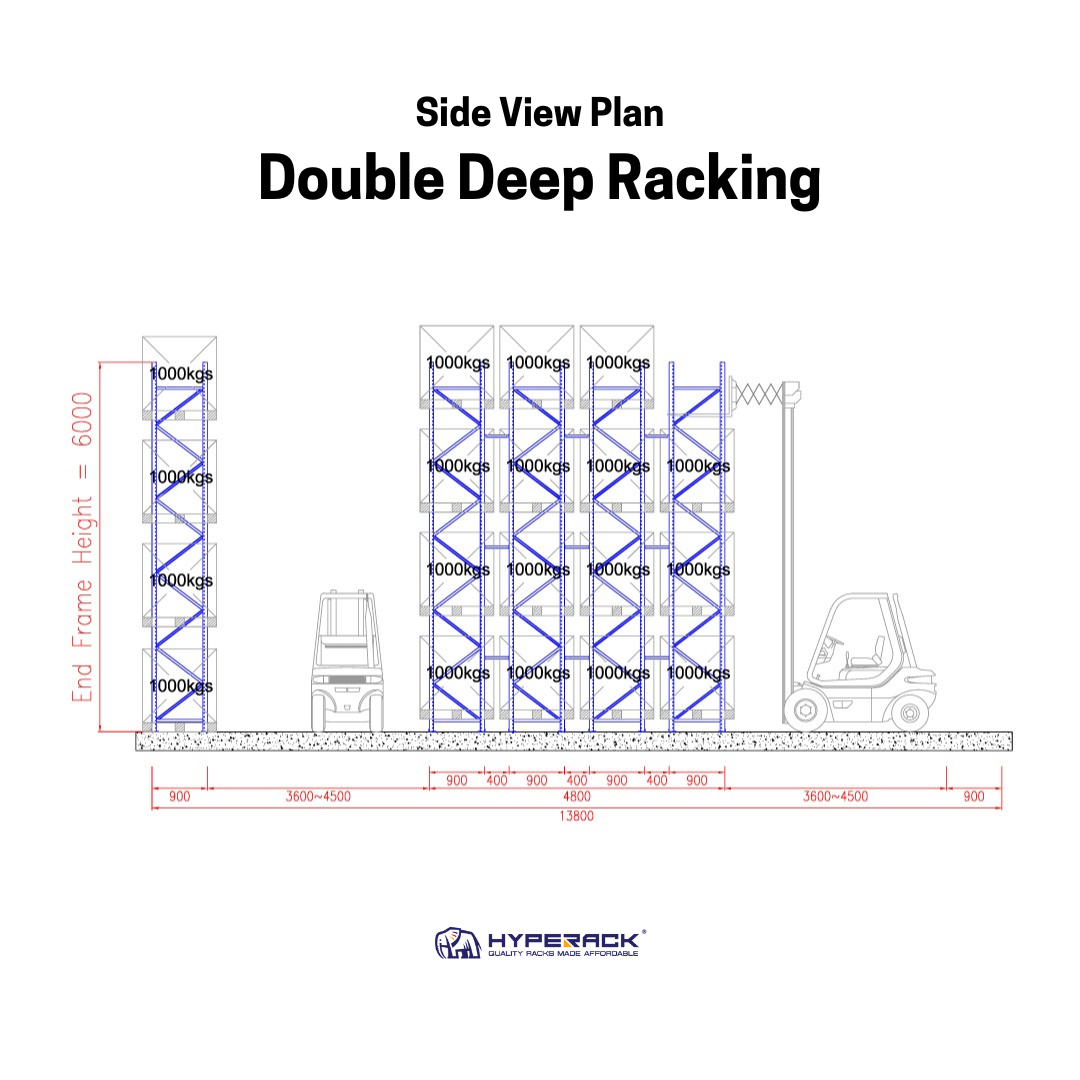
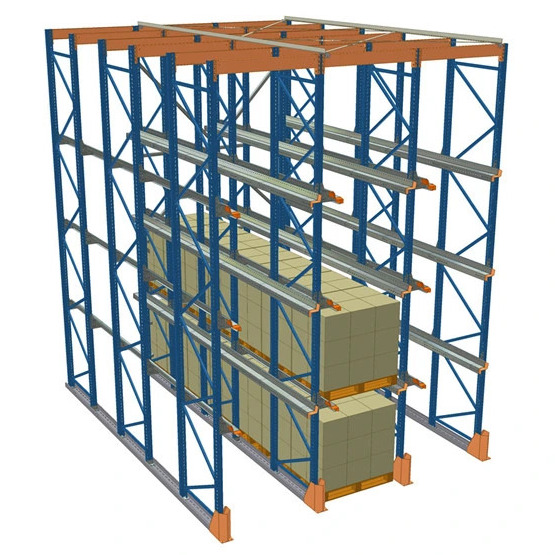
Ideal for
- When Drive-In Racking is not possible
- Reducing aisles space and increasing cubed space utilization
Advantages
- 30% more space than Selective pallet racking
- Lower cost than Drive-In Racking, while increasing capacity by up to 30%
- Doesn’t require a high number of homogenous pallet types
5 Easy Steps
1. Enquiry
Your journey begins with a simple enquiry. Once we receive your request, our team will review the details and match you with the right expert. We’ll then arrange a quick call or email to learn more about your goals and expectations.
2. Free Consultation
After your initial consultation, we’ll arrange a site visit to assess your space and needs in detail. You’ll meet your dedicated project manager, who will guide the process from start to finish—ensuring everything runs smoothly and efficiently.
3. 3D CAD Design
After the site survey, your project manager will recommend layout options tailored to your space and needs. We’ll then create accurate 3D CAD designs to help you visualise exactly how your facility will look once complete.
4. Instant Quote
You’ll receive a free, personalised quote with a full breakdown of the recommended equipment. We offer high-quality products at competitive prices, with reliable delivery times to keep your project on schedule.
5. Installation
We’ll agree on an installation schedule that suits your operations. Our accredited team will complete the setup, conduct a final inspection with you, and provide follow-up support, including annual safety checks.
Ready to make a change?
We are here to help you choose the best racking for your business. Schedule a call with our representative today.

FAQ
Is Drive-In Racking suitable for small warehouses?
Drive-In Racking is typically ideal for large warehouses, but it can also be effective in smaller spaces if you prioritize storage density. By reducing the need for aisles, this system allows you to use vertical space, making it a great option even for warehouses with limited floor area. However, careful planning is essential to ensure it meets your storage needs and operational flow.
How much weight can Drive-In Racking hold?
Drive-In Racking systems can hold a significant amount of weight, depending on the design and materials used. Generally, each lane can support up to 1,500 kg per pallet. The weight capacity can vary based on the racking system’s configuration and the type of products stored, so it’s essential to select the right specifications for your warehouse’s needs.
What are the safety considerations for Drive-In Racking Systems?
Safety is a crucial consideration when implementing Drive-In Racking. It’s essential to ensure that forklifts are properly trained to navigate narrow lanes and load/unload pallets. Additionally, regular inspections of the racking system should be conducted to prevent accidents due to structural damage. Implementing safety barriers or guides can help protect workers and equipment from collisions.
How does Drive-In Racking impact inventory management?
While Drive-In Racking excels in storage efficiency, it may present challenges for inventory rotation. The system primarily follows the Last-In-First-Out (LIFO) method, which works well for items with a long shelf life or bulk storage. However, for products with expiration dates or seasonal items, Drive-In Racking may not be the best option. For optimal inventory management, integrating RFID or barcode scanning can help track stock more accurately.
How deep is the storage in a Drive-In Racking System?
Drive-In Racking systems are designed for deep storage, with lanes that can extend up to 6-8 pallets deep. This depth allows you to maximize storage capacity by utilizing vertical and horizontal space effectively. The exact depth can vary based on the warehouse’s layout and the type of products being stored, but it typically provides a dense storage solution that optimizes the use of available space.
Are there any specific floor or foundation requirements for installing a Drive-In Racking system?
Yes, Drive-In Racking systems require a smooth, level, and durable concrete floor that can support the weight of both the racks and the stored goods. The foundation should be free from cracks or any structural weaknesses that could affect the stability of the racking system. It’s important that the floor be capable of handling the load capacity specified by the manufacturer to ensure safe operation.
What types of maintenance tools or equipment are required for Drive-In Racking systems?
Routine maintenance typically requires basic tools such as wrenches, screwdrivers, and impact drivers for tightening bolts, adjusting components, and inspecting parts for wear and tear. Additionally, specialized tools like forklift-mounted inspection devices or even laser alignment tools may be needed to check for any misalignment of the racking system. Safety gear like helmets, gloves, and eye protection should also be used during maintenance work.
What kind of safety training is required for using a Drive-In Racking System?
Operators should be trained on the safe operation of forklifts, particularly in confined spaces such as Drive-In Racking systems. Training should cover load handling, proper pallet placement, and how to avoid overloading racks. Additionally, safety training should include the use of personal protective equipment (PPE), understanding of weight limits, recognizing hazards, and emergency procedures. Workers should also be trained to inspect racking systems for damage and report any issues promptly.
What are the common challenges faced when using Drive-In Racking, and how can they be mitigated?
Common challenges include difficulty in accessing older stock, risk of forklift collisions, and system overload. These challenges can be mitigated by implementing a FIFO (First In, First Out) inventory management system, ensuring forklift operators are trained in driving safely in narrow aisles, and regularly maintaining the racks. Installing safety barriers, using proper pallet sizes, and conducting routine inspections can help reduce the risk of damage to the system.
How does a forklift drive in without hitting any pallet?
Forklift drivers are trained to operate in narrow aisles and navigate the system carefully. To avoid hitting any pallets, the Drive-In Racking system is often designed with adequate clearance and precise aisle widths to allow the forklift to maneuver without damaging the stored goods. Forklifts may also be equipped with safety sensors or cameras to help operators avoid collisions. Additionally, a clear operating procedure for the forklift drivers, including slow driving speeds and awareness of the load, helps ensure that pallets remain undisturbed.